Overview
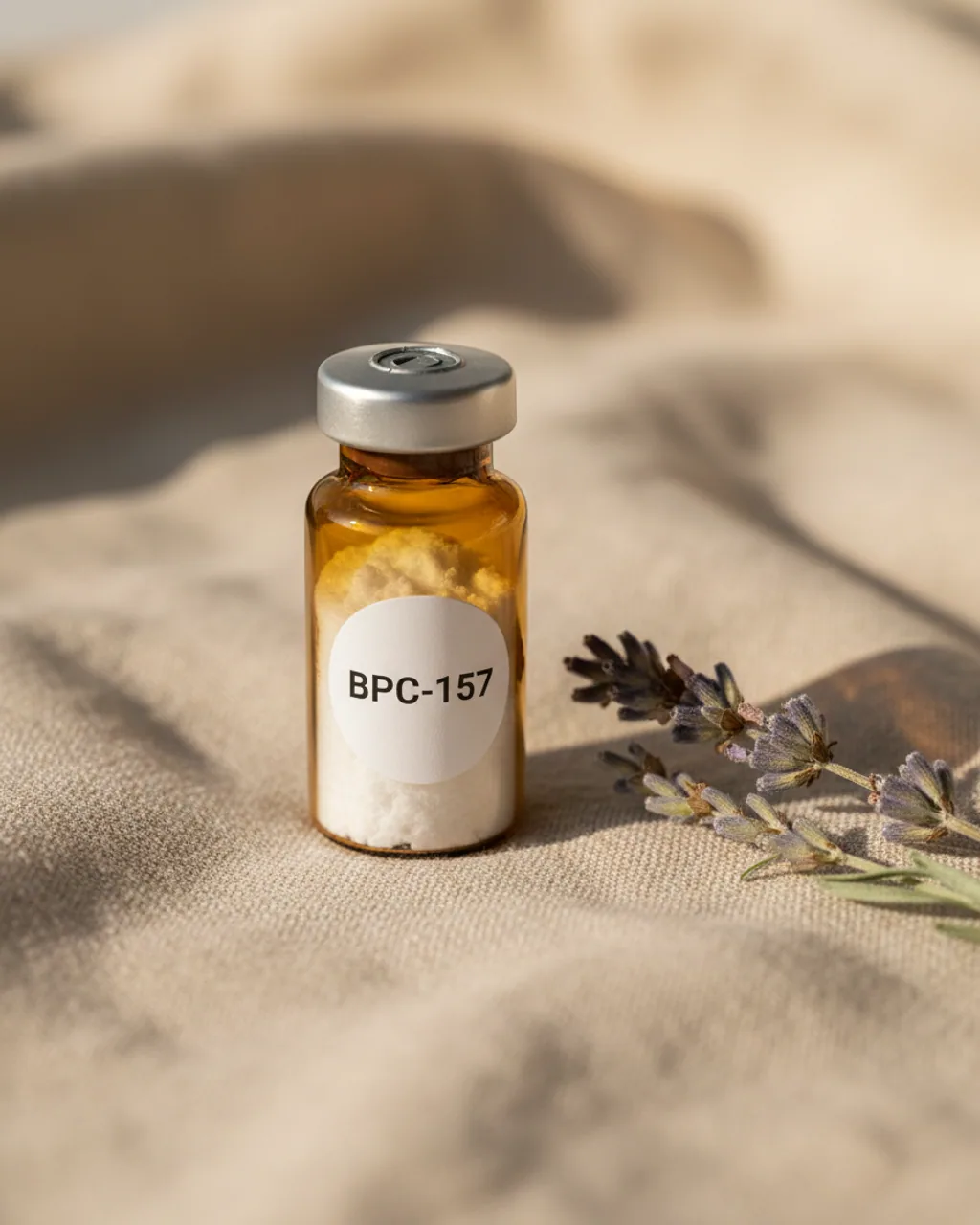
BPC-157 (Body Protection Compound 157) is a synthetic pentadecapeptide — a 15-amino-acid chain — derived from a protective protein found naturally in gastric juice. First isolated in human gastric secretions in the 1990s by Croatian researcher Stjepan Sikiric, BPC-157 has since become one of the most studied research peptides, accumulating over 48 peer-reviewed publications examining its regenerative properties across multiple organ systems.
The compound is notable for its apparent pleiotropic effects: it has demonstrated protective and regenerative activity in studies covering tendons, ligaments, muscle, bone, the gut lining, brain, heart, and cornea — an unusually broad profile for a single peptide.
Research status note: BPC-157 has no approved human indications as of 2025. All evidence comes from animal models (predominantly rat studies) and a limited number of human case reports. Clinical trials in humans are ongoing but have not yet produced sufficient evidence for regulatory approval.
Mechanism of Action
BPC-157’s effects appear to be mediated through several distinct pathways:
1. Growth Hormone (GH) Receptor Upregulation BPC-157 has been shown to upregulate GH receptor expression in healing tissue. This may partially explain its anabolic and repair-promoting effects on connective tissue, as GH signaling is central to fibroblast activation and collagen synthesis.
2. Nitric Oxide (NO) System Modulation The peptide modulates nitric oxide synthase (NOS) activity, increasing local blood flow to damaged tissue and enhancing the vascular response to injury. This pro-angiogenic effect is thought to be a primary driver of its healing observations in animal studies.
3. Tendon Fibroblast Stimulation In vitro studies have demonstrated that BPC-157 directly stimulates tendon fibroblast migration, proliferation, and gene expression for collagen production — particularly Type I collagen, the primary structural component of tendons and ligaments.
4. Gut-Brain Axis Interaction When administered orally, BPC-157 interacts with the enteric nervous system and appears to modulate the dopamine and serotonin systems, potentially explaining observed effects on behavior, stress response, and mood in animal models.
5. Anti-Inflammatory Mechanisms BPC-157 reduces inflammatory cytokine signaling (TNF-α, IL-6) in injury models while preserving the pro-healing phases of inflammation — a nuanced anti-inflammatory profile distinct from NSAIDs or corticosteroids.
Clinical Research & Evidence
Evidence Level: 🟠 EL3 — Strong animal data, limited human evidence
| Study Focus | Model | Findings |
|---|---|---|
| Tendon healing | Rat | Accelerated healing of full Achilles tendon transections vs. control |
| Gut permeability | Rat | Reversed NSAID-induced leaky gut; protected gastric mucosa |
| Bone healing | Rat | Enhanced callus formation and bone regeneration |
| Muscle healing | Rat | Reduced recovery time in crush injury model |
| Neurological | Rat | Neuroprotective in spinal cord injury; improved motor function |
| Cardiovascular | Rat | Protective against arrhythmias; promoted vessel healing |
The majority of BPC-157 research has been conducted by Sikiric’s research group in Zagreb. Independent replication remains limited, which is a significant caveat for clinical extrapolation.
Human Evidence: A small number of case reports from Croatian clinical practice describe positive outcomes in tendon and gut applications, but no randomized controlled trials in humans have been published to date.
Research-Referenced Dosing Protocols
The following dosing information reflects protocols described in animal research and widely circulated in research communities. This is NOT medical advice. Human dosing has not been established through clinical trials.
Subcutaneous/Intramuscular (most studied route in animals):
- Animal studies typically use 10–200 mcg/kg body weight
- Extrapolated human research doses: 200–500 mcg/day
- Injection site: near the site of injury (local) or abdominal fat (systemic)
- Typical research cycle: 4–8 weeks
Oral Administration:
- Animal oral studies use higher doses (1–10 mcg/kg up to mg/kg range)
- Oral BPC-157 appears to have systemic effects despite gut absorption challenges
- Some researchers favor oral for gut-specific applications
Side Effects & Contraindications
Reported in animal studies:
- No significant toxicity observed at therapeutic doses in rat studies
- No mutagenicity or carcinogenicity identified in available data
Theoretical/anecdotal human concerns:
- Possible stimulation of angiogenesis in cancer — theoretical concern; no human data
- Injection site reactions (bruising, redness)
- Nausea (rare, typically oral route)
Contraindications (theoretical):
- Active malignancy (pro-angiogenic mechanism could theoretically promote tumor vascularization)
- Pregnancy (no safety data)
Legal & Regulatory Status
| Region | Status |
|---|---|
| United States | Not FDA approved; no approved human indication. Listed on FDA’s list of prohibited compounded substances. Research use only. |
| European Union | Not EMA approved. Available as a research chemical in some member states. |
| Australia | Schedule 4 (prescription-only) classification under consideration |
| Canada | Not approved; research/grey market |
2024 Update: The FDA has explicitly listed BPC-157 on its prohibited substances list for compounding pharmacies under 503A, making it unavailable through US compound pharmacies. It circulates as an unregulated “research chemical.”
Research Citations
- Sikiric P, et al. Stable Gastric Pentadecapeptide BPC 157-Novel Therapy in Gastrointestinal Tract. Curr Pharm Des. 2011.
- Chang CH, et al. The promoting effect of pentadecapeptide BPC 157 on tendon healing involves tendon outgrowth, cell survival, and cell migration. J Appl Physiol. 2011.
- Vukovic S, et al. BPC 157 recovers rat from its post-operative complications. Molecules. 2021.
- Sikiric P, et al. Brain-gut Axis and Pentadecapeptide BPC 157: Theoretical and Practical Implications. Curr Neuropharmacol. 2016.
- Gwyer D, et al. Gastric pentadecapeptide body protection compound BPC 157 and its role in accelerating musculoskeletal soft tissue healing. Cell Tissue Res. 2019.