Overview
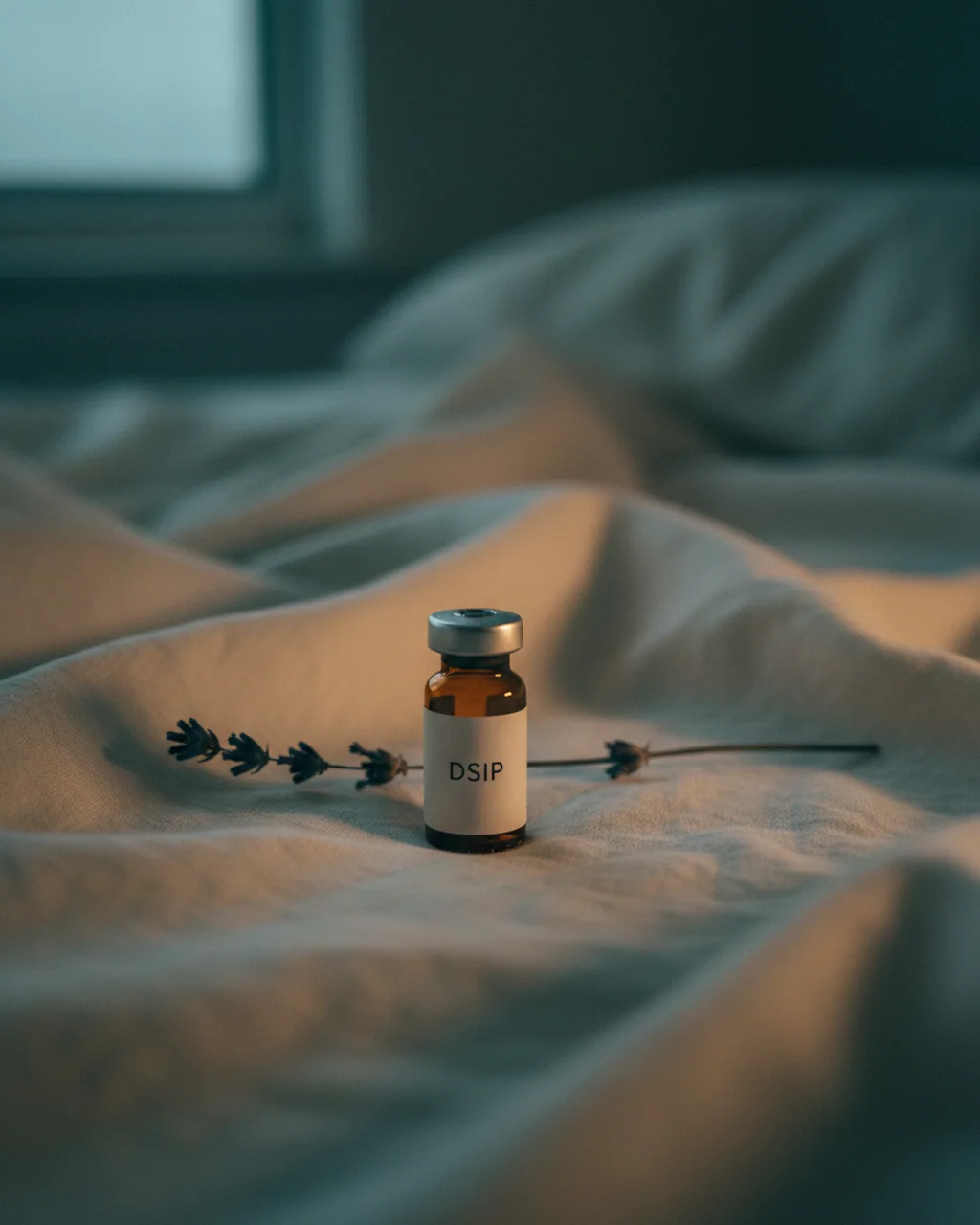
Delta Sleep-Inducing Peptide (DSIP) is a naturally occurring nonapeptide originally isolated from rabbit cerebral venous blood in 1974 by Marcel Monnier. It was identified by dialyzing blood from sleeping donors and applying the dialysate to waking recipients — which induced slow-wave (delta) sleep activity, giving the peptide its name.
DSIP is endogenously produced in the hypothalamus and pituitary gland and has been detected in peripheral blood, cerebrospinal fluid, and various organs. It appears to function as a neuromodulator — influencing sleep architecture, stress response, and neuroendocrine regulation — rather than as a simple sleep-inducing agent in the pharmacological sense.
Research interest in DSIP has fluctuated since its discovery; it remains an understudied but pharmacologically intriguing peptide with a distinctive profile compared to conventional sleep aids.
Mechanism of Action
Delta Wave Sleep Modulation: DSIP promotes slow-wave sleep (Stage 3/4) — the restorative, anabolic sleep phase associated with GH secretion, memory consolidation, and physical repair. It does not appear to work through the GABA-A receptor system (as benzodiazepines do) but through distinct neuromodulatory pathways.
HPA Axis Regulation: DSIP modulates cortisol and ACTH secretion, normalizing dysregulated stress-axis function — potentially relevant in stress-related sleep disturbances.
Somatostatin Inhibition: May modulate growth hormone release indirectly through inhibition of somatostatin (a GH-release inhibitor).
Opioid System Interaction: Some evidence suggests DSIP interacts with opioid receptor systems — potentially contributing to analgesic and stress-modulating effects.
Clinical Research & Evidence
Evidence Level: 🟠 EL3 — Limited clinical data; mechanistic interest
| Study | Focus | Finding |
|---|---|---|
| Schoenenberger et al. 1978 | Sleep induction | Intravenous DSIP increased delta sleep duration in humans |
| Schneider-Helmert et al. 1981 | Sleep disturbance | Improved sleep maintenance in insomnia patients |
| Yehuda et al. 2010 | PTSD/Stress | Proposed DSIP as stress modulator; reduced stress-related sleep disruption |
Limitation note: Most clinical work is from the late 1970s–1980s and has not been replicated with modern standards. DSIP research has been relatively dormant, though interest has resurged with the biohacker community.
Research-Referenced Dosing Protocols
- 100–500 mcg subcutaneous injection before sleep
- Intranasal: 200–400 mcg
- Typically used on nights when sleep quality is poor; not daily
Side Effects & Contraindications
Reported: Generally well-tolerated in available human studies.
- Mild sedation (intended effect)
- Rare injection site reactions
Compared to sleep aids: No reported dependence, tolerance, or next-day impairment (compared to benzodiazepines or Z-drugs). Mechanism is not GABA-based, reducing dependence potential theoretically.
Legal & Regulatory Status
| Region | Status |
|---|---|
| United States | Not FDA approved; research chemical |
| European Union | Not EMA approved |
Research Citations
- Monnier M, et al. Dialysis of sleep and waking factors in blood of the rabbit. Science. 1977.
- Schneider-Helmert D, et al. DSIP in the treatment of insomnia. Pharmacology. 1981.
- Graf MV, et al. Delta sleep-inducing peptide retards the development of amobarbital tolerance. Pharmacology. 1984.