Overview
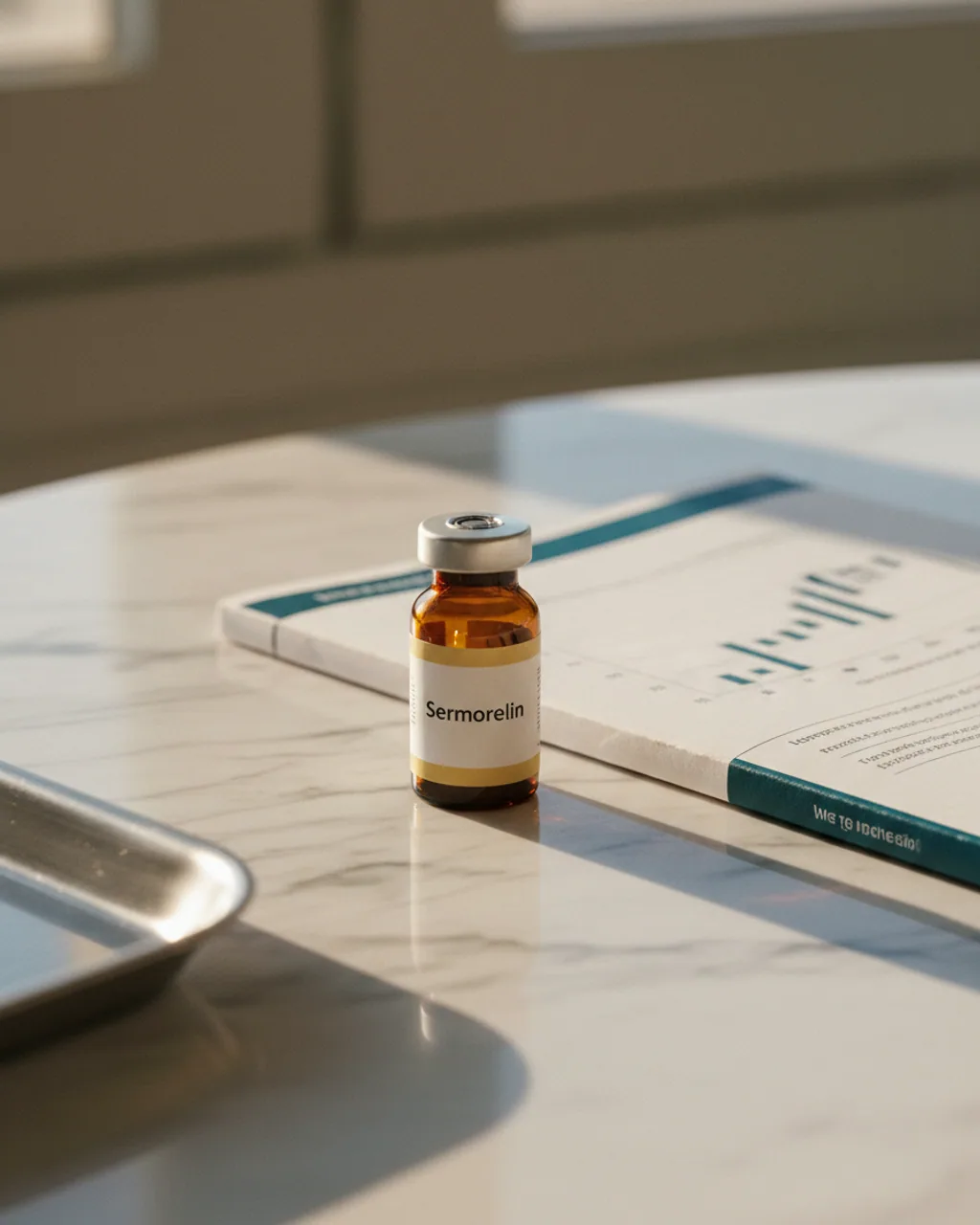
Sermorelin is a synthetic 29-amino-acid peptide consisting of the first 29 amino acids of endogenous growth hormone-releasing hormone (GHRH). Originally developed under the brand name Geref (Serono), it was FDA-approved in 1997 for the diagnosis and treatment of idiopathic GH deficiency in children. The brand was withdrawn from the market in 2002, but sermorelin has remained widely used in compounding pharmacy formulations for off-label adult anti-aging and hormone optimization applications.
Sermorelin is considered the “grandfather” of GHRH analogs in clinical use — older and shorter-acting than CJC-1295, but with the most established human safety record among the GHRH class.
Mechanism of Action
GHRH-R Agonism: Sermorelin binds to and activates GHRH receptors on pituitary somatotrophs, triggering cyclic AMP-mediated intracellular signaling that stimulates GH synthesis and release. Unlike CJC-1295 with DAC, sermorelin has a short half-life (~10–20 minutes) due to rapid proteolytic degradation, producing a physiological GH pulse rather than sustained elevation.
Hypothalamic-Pituitary Axis Preservation: Because sermorelin stimulates the pituitary to produce its own GH (rather than supplying exogenous GH directly), the hypothalamic-pituitary feedback loop remains intact — the pituitary can still respond to somatostatin-mediated inhibition, preventing the chronic downregulation seen with exogenous GH administration.
IGF-1 Downstream: GH released in response to sermorelin drives hepatic IGF-1 production — the primary mediator of anabolic, lipolytic, and tissue repair effects.
Clinical Research & Evidence
Evidence Level: 🟡 EL2 — Human trials for pediatric indication; off-label adult use supported by mechanistic data
| Study | Focus | Finding |
|---|---|---|
| Thorner et al. 1996 | Pediatric GHD | Effective at stimulating GH; approved for use |
| Vittone et al. 1997 | Adults with low IGF-1 | Improved body composition, sleep quality, cognition vs. placebo |
| Khorram et al. 1997 | Older adults | Sermorelin improved sleep architecture, particularly delta wave sleep |
The 1997 Vittone study (32 adults, randomized, double-blind) provided evidence that sermorelin improved body composition and subjective wellbeing in adults with below-average IGF-1 — the primary basis for off-label prescribing in adult hormone optimization.
Research-Referenced Dosing Protocols
Off-label adult use. No FDA-approved adult dosing exists.
- Typical compounded protocol: 200–500 mcg subcutaneous, 5–7 nights/week before bed
- Night dosing takes advantage of the physiological nocturnal GH surge amplification
- Often combined with Ipamorelin for complementary GHSR stimulation
Side Effects & Contraindications
Reported:
- Injection site reactions (most common)
- Flushing
- Headache
- Dizziness
- Transient water retention
- Hyperglycemia (at higher doses)
Compared to exogenous GH: Sermorelin is generally considered lower-risk than exogenous GH administration because it works through the body’s own pituitary — with natural feedback inhibition preserved.
Contraindications:
- Active malignancy
- Hypothyroidism (must be corrected first — hypothyroidism blunts GH response)
- Pregnancy
Legal & Regulatory Status
| Region | Status |
|---|---|
| United States | Original FDA approval withdrawn (Geref). Available as a compounded medication through 503A pharmacies; one of the few GH-axis peptides with a history of FDA approval. Off-label prescribing by licensed physicians is legal. |
| European Union | Not EMA approved; not generally available |
| WADA | Prohibited (GH releasing factors) |
Important: Sermorelin’s compounding status differs from most other research peptides because of its prior FDA approval history. It has historically been more readily available through US compounding pharmacies than CJC-1295 or Ipamorelin.
Research Citations
- Thorner MO, et al. Sermorelin acetate, a synthetic analogue of GHRH. J Clin Endocrinol Metab. 1996.
- Vittone J, et al. Effects of single nightly injections of growth hormone-releasing hormone in healthy elderly men. Metabolism. 1997.
- Khorram O, et al. Activation of immune function by dehydroepiandrosterone in age-advanced men. J Gerontol. 1997 (sermorelin arm).
- Walker RF. Sermorelin: a better approach to management of adult-onset growth hormone insufficiency? Clin Interv Aging. 2006.